
What is Youth Homelessness?
5.4 Million
Youth & young adults experience homelessness annually in the United States.
What is it?
Invisible Faces
Early Intervention
Homelessness is more than the absence of a roof. It's the absence of a safe, stable place to call home. These situations and definitions of homelessness matter because they influence who gets counted, who qualifies for assistance, and where funding and resources are directed.
When definitions are too restrictive, youth experiencing hidden homelessness can fall through the cracks. They may be excluded from homelessness statistics, overlooked in funding decisions, or unable to access shelter, housing assistance, and supportive services until their situation becomes more severe.
A youth shouldn't have to sleep on the streets to be recognized as homeless or to qualify for help. Nor should they have to make themselves homeless to qualify for services.
Homeless youth are not visible in the classic ways many perceive homelessness, i.e., sleeping on street corners, panhandling or passed out on a sidewalk. Because of their vulnerability, they hide, which is why they have been called an “invisible” homeless population. Many homeless teens move from couch to couch, from friend’s house to friend’s house, living in motels, with family, etc. Additionally, some might sleep in hallways, stairwells, cars, tents, and other places not meant for human habitation.
In Alaska, minors make up 30% of the homeless population. Nearly half come from rural areas and struggle to adapt.
Youth without stable housing face increased risks of exploitation, trafficking, abuse, disrupted education, and chronic homelessness. Waiting until a youth is living on the streets or experiencing a more severe crisis can mean missing critical opportunities to intervene.
Key Causes
- Family conflict and abuse: Physical, emotional, or sexual abuse, extreme family dysfunction, or rejection due to sexual orientation or gender identity.
- Poverty and housing instability: Deep household economic hardship that forces families or youth out of housing.
- Gaps in public systems: Abruptly losing support services when turning 18 or aging out of foster care (often called the "cliff effect").
Unsheltered
Increase
Unreached
Who Is Most at Risk
Youth homelessness can affect any young person, regardless of their background or circumstances. However, certain experiences and barriers can place youth at greater risk of losing stable housing.
Runaway Youth Statistics
Million
Million
Thousand
Why do they Run?
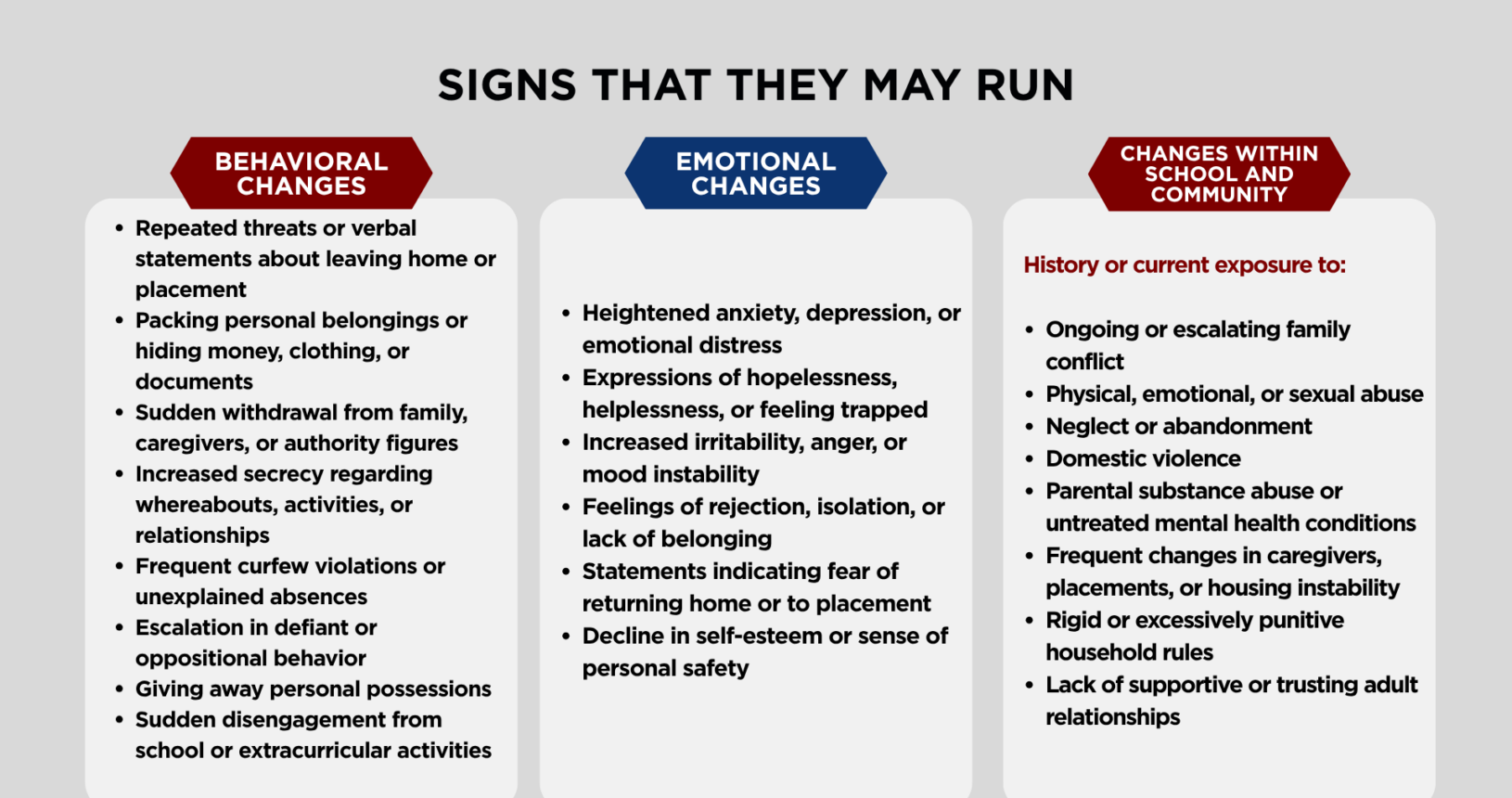
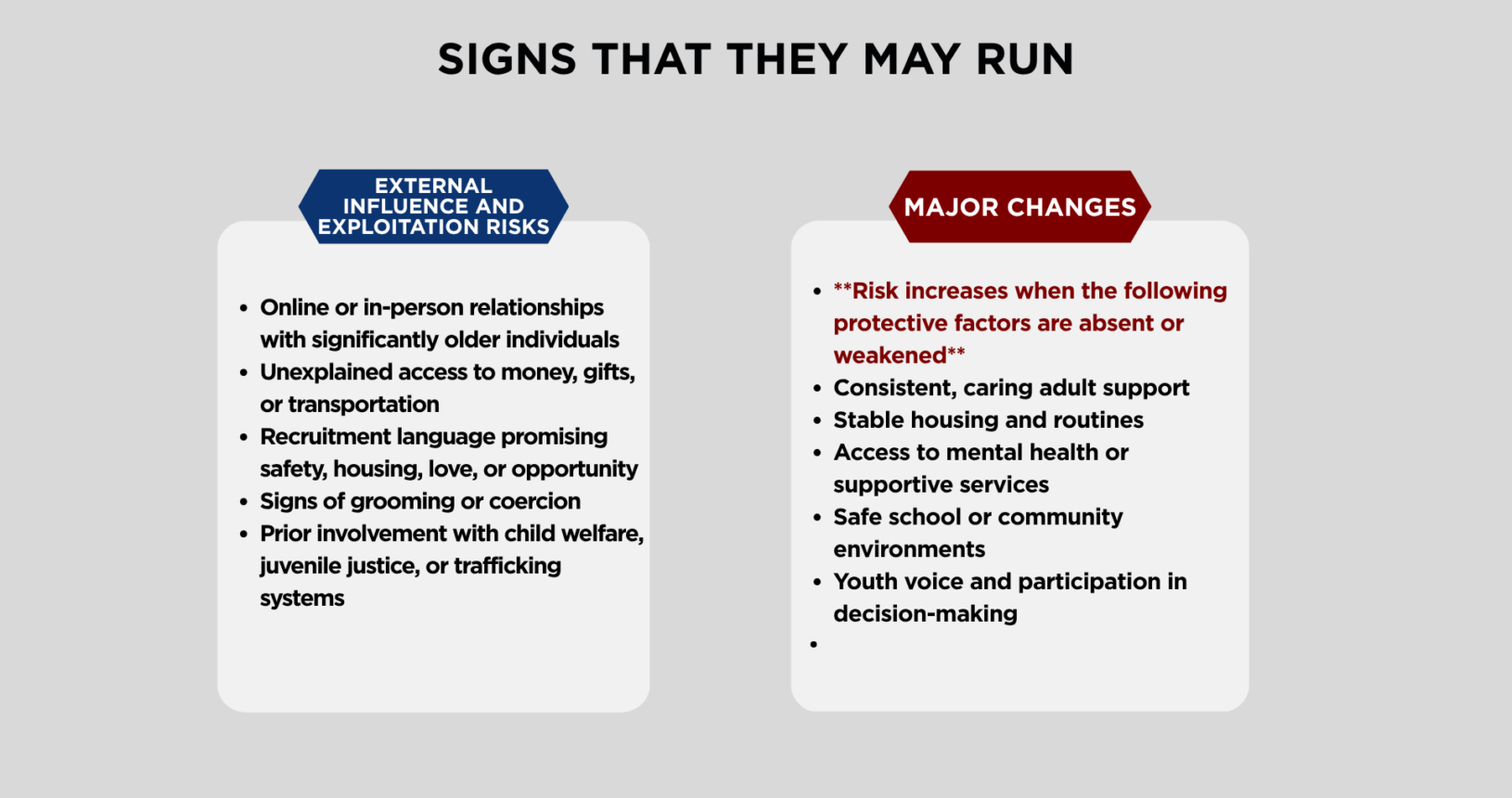
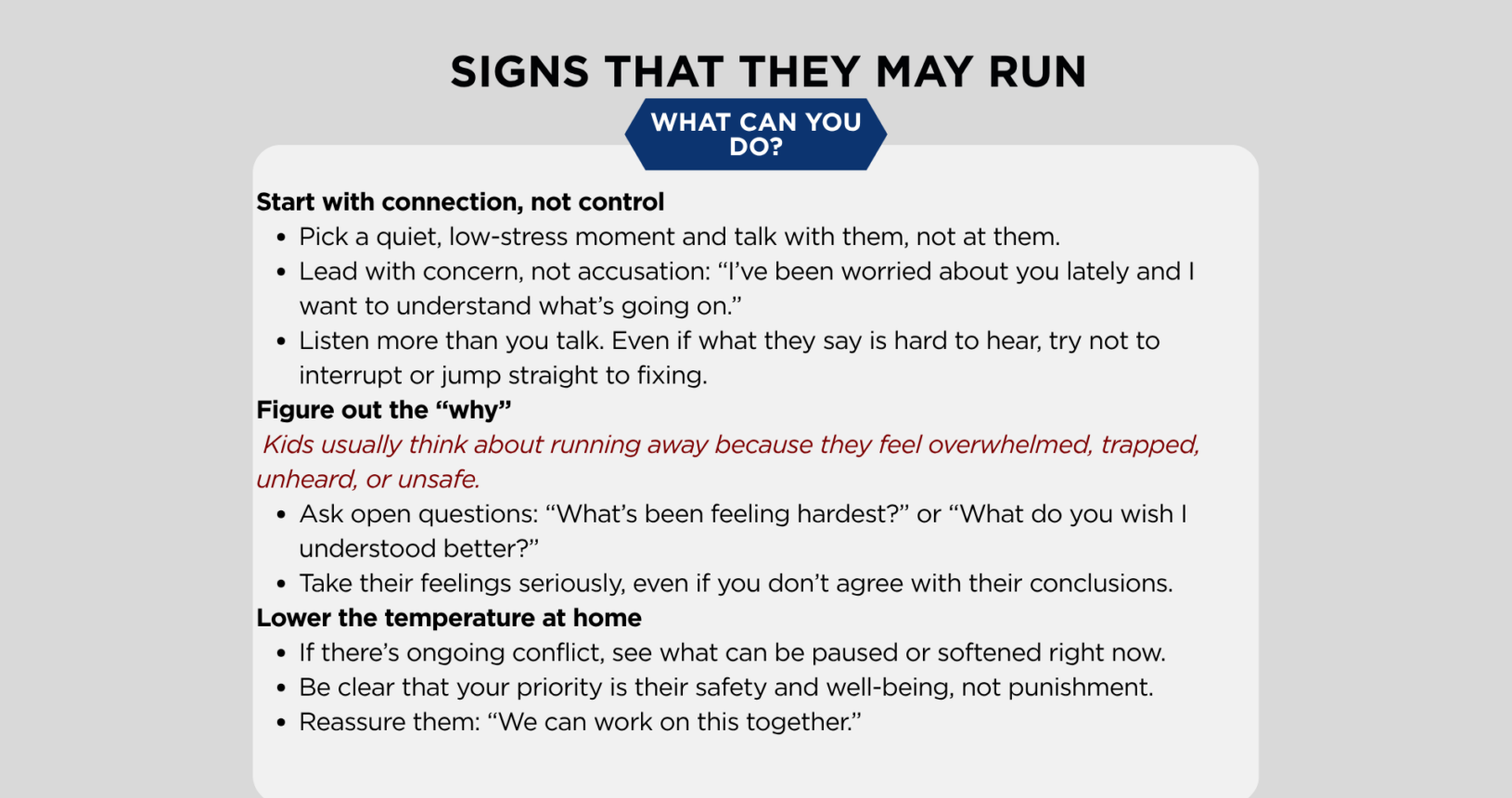
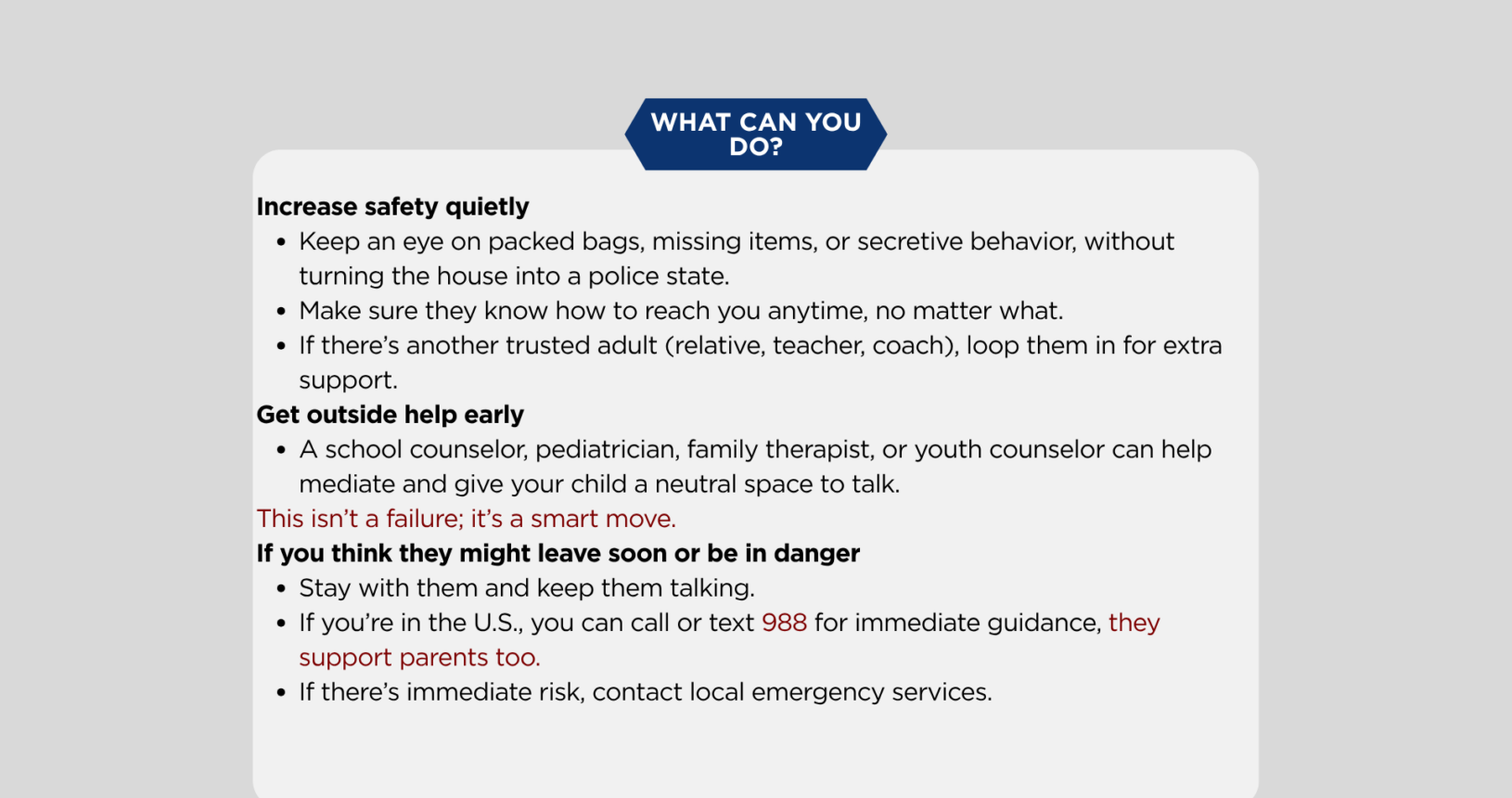
One in five teens will run away at some point in their life – whether they are threatening to run away, or they’ve run and have decided to return home. Runaway behavior is frequently a coping response to unmet needs, perceived lack of safety, or conflict within a youth’s environment. Indicators should be interpreted within the youth’s developmental, cultural, and situational context.
Additional Resources
- National Runaway Safeline - 1-800-RUNAWAY
- AK State Troopers - 907-451-5100
- Fairbanks Police - 907-450-6500
If You Find a Runaway...
Things to consider:
- How old are they?
- What is their name?
- Where did you find them?
- Where did they come from or run away from?
- Have you called FPD or the Troopers?
What to do:
- Approach cautiously and ask if they need help.
- If they do need help, call FPD or Troopers or 911.
- Give us a call for guidance!
What NOT to do:
- DO NOT give the child a ride to where they are asking to go. They may be asking to get a ride to an unsafe family member, friend, or a drop off location. This could put them in a dangerous situation that they may not be able to get out of safely.
- DO NOT take them home with you to warm up, feed them, or change their clothes. It is understandable that as a stranger you would want to help, but this could potentially desensitize them into thinking that they can trust every stranger to make sure they're safe.
- DO NOT drop them off at a shelter without calling guardian or LEO first.